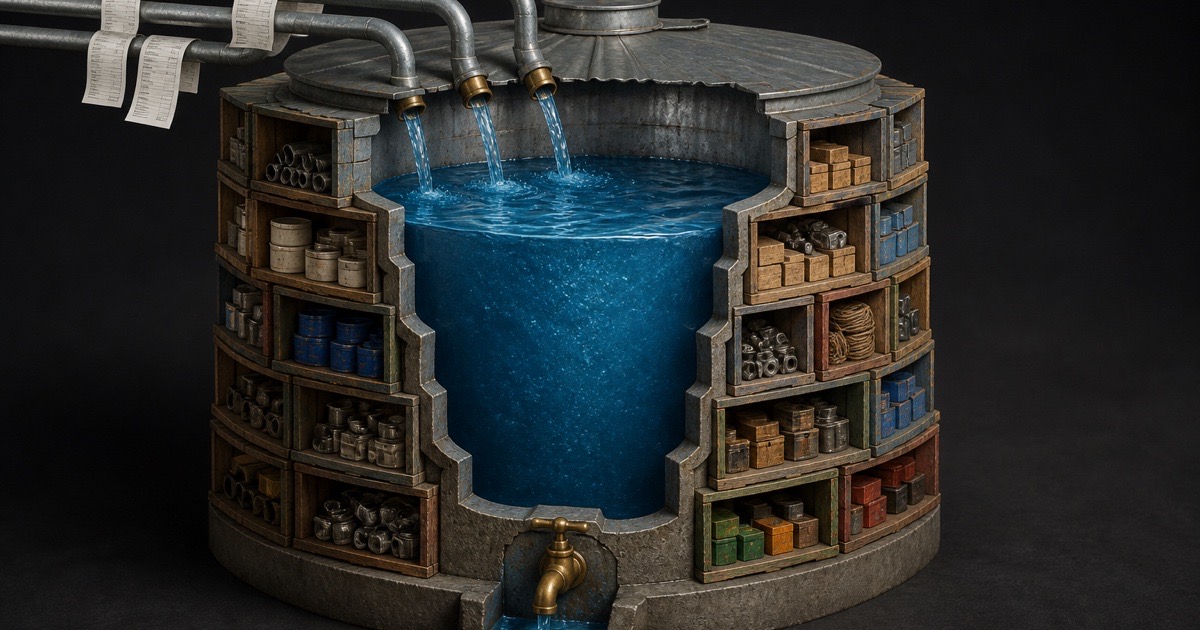

Imagine buying $100 of a Manhattan office building, $50 of a Picasso painting, or $200 of US Treasury bonds – all settled instantly on blockchain, tradeable 24/7, and without intermediary fees eating into your returns.
Real-world asset (RWA) tokenisation is no longer hypothetical. Siemens, the World Bank and the Hong Kong government have all issued live blockchain-based instruments, and analysts project substantial growth. Boston Consulting Group and ADDX estimated in 2022 that tokenised assets could reach $16.1 trillion, about 10% of global GDP, by 2030.
This guide covers how tokenisation works, where it is being applied, and the main projections, risks and limitations.
What is Real-World Asset Tokenisation?
Real-world asset tokenisation is the process of representing ownership rights to physical or traditional financial assets as digital tokens on a blockchain.
The Simple Explanation
Think of it like this:
Traditional ownership: You buy a property deed, store it with your lawyer, and if you want to sell a portion, you need complex legal structures (SPVs, limited partnerships) costing tens of thousands in legal fees.
Tokenised ownership: The property ownership is divided into 1 million tokens. You buy 1,000 tokens (0.1% ownership) for $50,000. Want to sell half your stake? Transfer 500 tokens to a buyer in seconds, settled on blockchain.
Key Characteristics
- Fractional ownership: Assets divisible into small, affordable pieces
- 24/7 trading: No market hours, trade anytime globally
- Instant settlement: Transactions settle in minutes, not days/weeks
- Lower barriers: Minimum investments can fall from six figures to around $100 on some platforms
- Transparent ownership: Blockchain records all transactions permanently
- Programmable rights: Smart contracts automate dividends, voting, compliance
Why Tokenisation is Happening Now
The technology has existed for years. Three recent developments made it viable:
1. Regulatory Clarity
United States:
- SEC providing clearer guidance on security tokens
- Multiple states recognising digital securities legally
- Alternative Trading Systems (ATS) licensed for security tokens
Europe:
- MiCA (Markets in Crypto-Assets) regulation providing framework
- Several countries issuing tokenisation licenses
- ECB exploring digital euro for asset settlement
Asia:
- Singapore MAS leading with progressive frameworks
- Hong Kong positioning as tokenisation hub
- UAE creating special economic zones for digital assets
2. Institutional Infrastructure
Major financial institutions now providing:
- Custody services: Banks offering institutional-grade token custody
- Tokenisation platforms: JPMorgan, Goldman Sachs building infrastructure
- Trading venues: Regulated exchanges launching security token markets
- Legal frameworks: Standardised contracts and compliance tools
3. Technology Maturation
- Scalability: Layer-2 solutions making transactions cheap ($0.01) and fast
- Interoperability: Cross-chain bridges enabling asset movement
- Security: Battle-tested smart contracts and auditing standards
- User experience: Wallets becoming as easy as mobile banking
Asset Classes Being Tokenised
1. Real Estate
Market size: $326.5 trillion at the end of 2020, since risen to roughly $393 trillion (Savills)
How it works:
- Property ownership divided into tokens (e.g., 10,000 tokens = 100% ownership)
- Investors buy tokens representing fractional ownership
- Rental income distributed automatically via smart contracts
- Tokens tradeable on secondary markets
Current examples:
- RealT: Pioneered tokenised US rental homes with entry points around $50, though it is currently the subject of a City of Detroit lawsuit over property conditions, a caution on operational risk in this sector
- Elevated Returns: High-end vacation properties, minimum $10K
- Blocksquare: European real estate tokenisation platform
Benefits:
- Liquidity in traditionally illiquid market
- Geographic diversification (own property across countries)
- Lower transaction costs (no brokers, instant settlement)
- Automated income distribution
Challenges:
- Property management still required off-chain
- Legal complexity across jurisdictions
- Valuation and price discovery
- Tax implications vary by country
2. Bonds and Fixed Income
Market size: more than $140 trillion globally (SIFMA, 2024 figure $145.1 trillion)
Why tokenise bonds?
- Settlement takes T+1 in the US (since May 2024) and T+2 or longer in many other markets
- Institutional bond offerings often carry minimum denominations of $100,000 or more
- Trading requires multiple intermediaries
- Secondary market liquidity poor for many bond types
Tokenisation improvements:
- Instant settlement: T+0 or even atomic swaps
- Fractional ownership: $100 minimums instead of $100K
- 24/7 trading: No exchange hours
- Automated coupon payments: Smart contracts distribute interest
- Transparent pricing: All trades recorded on-chain
Real examples:
- Siemens: Issued €60M digital bond on blockchain (2023)
- World Bank: Bond-i raised A$110 million (about US$80 million) via blockchain (2018)
- Goldman Sachs: Digital asset platform tokenising bonds
- Ondo Finance: Tokenised US Treasury yields, $500M+ TVL
3. Commodities
Market size: commodities account for roughly one third of world trade value, several trillion dollars of exports a year (UNCTAD)
Commodities being tokenised:
- Gold: Paxos Gold (PAXG), Tether Gold (XAUT), each token = 1 oz gold
- Oil: Tokenised barrels traded and settled digitally
- Agricultural products: Coffee, wheat, soybeans represented as tokens
- Carbon credits: Verified carbon offsets as tradeable tokens
Benefits:
- No storage costs for individual investors
- Instant global trading
- Verifiable provenance and authenticity
- Fractional ownership of expensive commodities
Use case example:
Farmer in Kenya tokenises coffee harvest → Buyer in Japan purchases tokens → Payment settled instantly → Physical delivery arranged separately → Everyone can verify the transaction on-chain
4. Art and Collectibles
Market size: an estimated $65 billion in 2023, easing to about $57.5 billion in 2024 (Art Basel and UBS)
The problem tokenisation solves:
- Art investing traditionally requires $10K-$1M+ per piece
- Authenticity verification is complex and expensive
- Selling requires auction houses taking 10-25% commissions
- Liquidity is extremely poor
How art tokenisation works:
- Physical artwork authenticated and insured
- Ownership divided into tokens (e.g., 10,000 tokens = 100%)
- Tokens sold to investors (minimum $50-$500)
- Art stored securely by professional custodian
- Tokens tradeable on secondary market
- If artwork sold, proceeds distributed to token holders
Platforms:
- Masterworks: The largest fractional ownership platform for blue-chip art, built on SEC-registered securities rather than blockchain tokens
- Maecenas: Ran the first tokenised auction of a blue-chip artwork in 2018, selling a 31.5% stake in a Warhol at a $5.6 million valuation, though the platform has since gone quiet
Beyond visual art:
- Vintage cars and watches
- Rare wine collections
- Sports memorabilia
- Historical artifacts
5. Private Equity and Venture Capital
Market size: private markets, including private equity and venture capital, held $13.1 trillion in assets under management as of mid-2023 (McKinsey)
Current problems:
- Minimum investments typically $250K-$1M
- 10-year lock-up periods with no liquidity
- Limited partner interests difficult to transfer
- High administrative overhead
Tokenisation enables:
- Lower minimums: $10K-$50K instead of $250K+
- Secondary trading: LP interests tradeable before fund maturity
- Automated administration: Capital calls, distributions via smart contracts
- Transparent reporting: On-chain portfolio updates
Emerging models:
- Tokenised VC funds: Fractional ownership of venture portfolios
- SPVs for individual deals: Tokenised access to specific startup investments
- Carry tokens: Trading fund manager performance fees
6. Revenue-Producing Assets
Intellectual property:
- Music royalties: Own percentage of song streaming revenue
- Patent licensing: Share in patent royalty income
- Book rights: Participate in publishing revenues
- Film residuals: Fractional ownership of movie income streams
Example: Artist tokenises future streaming royalties → Investors buy tokens → Each month, streaming income distributed automatically to token holders → Artists get upfront capital, investors get passive income
Infrastructure assets:
- Solar panel arrays (tokenise energy production revenue)
- Toll roads (tokenise toll collection income)
- Telecom towers (tokenise lease payments)
- Data centres (tokenise hosting revenue)
How Tokenisation Actually Works
The Technical Process
Step 1: Asset identification and legal structure
- Identify asset to tokenise (property, artwork, bond, etc.)
- Create legal wrapper (SPV, trust, or similar entity)
- Transfer asset ownership to legal entity
- Establish rights associated with tokens
Step 2: Token creation
- Deploy smart contract on blockchain (Ethereum, Polygon, etc.)
- Define total token supply (e.g., 1M tokens = 100% ownership)
- Program rights (dividends, voting, redemption, transfers)
- Implement compliance rules (KYC/AML, accredited investor checks)
Step 3: Token distribution
- Conduct token offering (private placement or public offering)
- Investors complete KYC/AML verification
- Purchase tokens with fiat or cryptocurrency
- Tokens distributed to investor wallets
Step 4: Ongoing management
- Asset generates income (rent, interest, royalties)
- Smart contract automatically distributes income to token holders
- Investors can trade tokens on secondary market
- Transparent reporting via blockchain
Step 5: Exit
- Asset sold (property sale, bond maturity, artwork auction)
- Proceeds distributed to token holders automatically
- Tokens burned or redeemed
Blockchain Selection
Different blockchains have different trade-offs:
Ethereum
- Pros: Most established, largest developer ecosystem, institutional adoption
- Cons: Higher transaction costs ($2-20), slower settlement
- Best for: High-value assets ($1M+), institutional offerings
Polygon
- Pros: Low fees ($0.01), fast, Ethereum-compatible
- Cons: Less decentralised than Ethereum mainnet
- Best for: Retail offerings, high transaction volume
Avalanche
- Pros: Very fast finality (1 second), low fees, good for financial assets
- Cons: Smaller ecosystem than Ethereum
- Best for: Trading applications requiring instant settlement
Private/Permissioned chains
- Pros: Full control, regulatory compliance easier, privacy
- Cons: Less transparent, interoperability limited
- Best for: Enterprise use cases, regulated securities
Market Projections and the Ecosystem
Market Size Projections
Boston Consulting Group: $16 trillion tokenised assets by 2030
Citi: $4-5 trillion by 2030 (conservative estimate)
Deloitte: around $4 trillion of real estate could be tokenised by 2035, up from under $0.3 trillion in 2024
Where Capital is Flowing
1. Infrastructure providers
- Blockchain platforms optimised for asset tokenisation
- Custody solutions for tokenised assets
- Compliance and KYC/AML platforms
- Tokenisation-as-a-service companies
2. Trading venues
- Regulated security token exchanges
- Alternative Trading Systems (ATS) for digital assets
- DeFi protocols enabling secondary trading
- Market makers providing liquidity
3. Tokenisation platforms
- Vertical-specific platforms (real estate, art, bonds)
- Horizontal platforms (tokenise anything)
- White-label solutions for institutions
4. Service providers
- Legal firms specialising in token structures
- Auditing firms for smart contract security
- Rating agencies for tokenised assets
- Insurance for digital asset custody
5. The tokenised assets themselves
- Diversified portfolios of tokenised real estate
- Tokenised bond funds
- Fractional ownership of alternative assets
- Revenue-producing digital asset portfolios
Investment Thesis
Bull case:
- Proponents argue tokenisation will reach most asset classes
- The infrastructure layer could capture significant value, as card networks did in payments
- Network effects favour early platforms
- Regulatory clarity accelerating adoption
- Major institutions committing resources
Bear case:
- Regulatory backlash could halt progress
- Technical challenges (scalability, interoperability) remain
- Adoption slower than projections (incumbents resist)
- Multiple competing standards fragment market
- Security breaches damage trust
Challenges and Limitations
Regulatory Uncertainty
Securities law:
- Most tokenised assets qualify as securities
- Requires registration or exemption
- Cross-border offerings complex
- Ongoing reporting obligations
Tax treatment:
- Unclear in many jurisdictions
- Capital gains vs. income treatment
- Reporting requirements evolving
- International tax coordination needed
Technical Challenges
Scalability:
- Blockchains limited in transaction throughput
- High transaction costs on some chains
- Settlement times variable
Interoperability:
- Assets tokenised on different chains can’t easily interact
- Cross-chain bridges have security risks
- Standardisation lacking
Custody:
- Who holds private keys?
- What happens if keys lost?
- Insurance for digital assets still developing
Practical Limitations
Liquidity paradox:
- Tokenisation promises liquidity
- But requires sufficient buyers/sellers
- Many tokenised assets have thin markets
- Bid-ask spreads can be wide
Valuation challenges:
- How to price illiquid tokenised assets?
- Marked-to-market vs. mark-to-model
- Price discovery in nascent markets
Offline dependencies:
- Physical assets still require physical management
- Legal recourse still requires traditional courts
- Token ownership doesn’t guarantee asset access
How to Get Started
For Investors
Step 1: Education
- Understand how tokenisation works
- Learn basic blockchain concepts
- Study regulatory frameworks in your jurisdiction
Step 2: Set up infrastructure
- Open account with regulated tokenisation platform
- Complete KYC/AML verification
- Set up cryptocurrency wallet if required
- Understand tax implications
Step 3: Start small
- Invest small amounts initially
- Diversify across asset classes
- Stick to regulated platforms with track records
- Understand liquidity constraints
Platforms to explore:
- Real estate: RealT, Lofty, Elevated Returns
- Bonds: Ondo Finance, Backed Finance
- Art: Masterworks, Freeport
- Commodities: Paxos Gold, Tether Gold
For Asset Owners
Questions to ask:
- Is your asset suitable for tokenisation? (stable, income-producing, valuable)
- Is there demand for fractional ownership?
- Can you handle regulatory compliance?
- Do you have resources for ongoing management?
- What are your exit options?
Tokenisation providers:
- Full-service: Securitize, Tokeny, Polymath (handle everything)
- Technical: Fireblocks, Hex Trust (custody and infrastructure)
- Legal: Specialised law firms in Switzerland, Singapore, Delaware
For Entrepreneurs
Opportunities in the ecosystem:
- Vertical-specific tokenisation platforms
- Regional exchanges for tokenised assets
- Market-making and liquidity provision
- Analytics and valuation services
- Education and advisory services
- Integration tools for traditional finance
The Future of Tokenised Assets
Near-term (2025-2027)
Institutional adoption accelerates:
- Major banks launch tokenisation offerings
- Fortune 500 companies tokenise balance sheet assets
- Government bonds issued as digital-native securities
- Stablecoins become standard settlement layer
Infrastructure matures:
- Cross-chain interoperability improves dramatically
- Custody solutions become institutional-grade
- Regulatory frameworks harmonise internationally
- Trading volumes reach critical mass for liquidity
Medium-term (2027-2030)
Consumer adoption:
- Retail investors routinely hold tokenised assets
- Traditional brokerages integrate tokenised offerings
- Fractional ownership becomes mainstream
- Mobile apps make tokenisation invisible to users
New asset classes emerge:
- Personal data tokenised and traded
- Attention and influence become tokenised assets
- AI models and training data tokenised
- Carbon and environmental credits fully digitised
Long-term (2030+)
Everything gets tokenised:
- Physical assets default to having digital twins
- Ownership transfer happens primarily on-chain
- Traditional stock exchanges become token exchanges
- Financial system rebuilt on tokenised infrastructure
Economic implications:
- Dramatically increased liquidity across asset classes
- Lower transaction costs (fewer intermediaries)
- Greater financial inclusion (lower barriers to entry)
- More efficient capital allocation globally
Bottom Line
Real-world asset tokenisation isn’t just about making things digital, it’s about fundamentally restructuring how ownership works. The implications are enormous:
For investors: Access to asset classes that were previously hard to reach, and broader diversification. Outcomes depend on the underlying assets, the platform and liquidity.
For asset owners: New sources of liquidity, lower cost of capital, and access to global investor base.
For entrepreneurs: Scope to build infrastructure, platforms and services in a market that analysts project could reach several trillion dollars.
The technology exists. The regulatory frameworks are emerging. The institutional infrastructure is being built. The only question is pace of adoption.
Institutional capital is already committed: banks, asset managers and governments are building and using tokenisation infrastructure today. For investors, asset owners and entrepreneurs alike, it is an area worth understanding.
If the BCG and ADDX projection proves accurate, this market is still at an early stage.
Sources
- ADDX and Boston Consulting Group, “BCG, ADDX report: Asset tokenization to grow 50x into US$16 trillion opportunity by 2030”, 22 September 2022, https://addx.co/insights/bcg-addx-report-asset-tokenization-to-grow-50x-into-us-16-trillion-opportunity-by-2030/
- US Securities and Exchange Commission, “Framework for ‘Investment Contract’ Analysis of Digital Assets”, 3 April 2019, https://www.sec.gov/corpfin/framework-investment-contract-analysis-digital-assets
- European Union, “Regulation (EU) 2023/1114 on markets in crypto-assets (MiCA)”, 31 May 2023, https://eur-lex.europa.eu/eli/reg/2023/1114/oj
- European Central Bank, “Digital euro”, accessed 25 July 2026, https://www.ecb.europa.eu/euro/digital_euro/html/index.en.html
- Monetary Authority of Singapore, “Project Guardian”, accessed 25 July 2026, https://www.mas.gov.sg/schemes-and-initiatives/project-guardian
- Hong Kong Monetary Authority, “HKSAR Government’s Inaugural Tokenised Green Bond Offering”, 16 February 2023, https://www.hkma.gov.hk/eng/news-and-media/press-releases/2023/02/20230216-3/
- Digital Asset, “Goldman Sachs’ Tokenization Platform GS DAP, Leveraging Daml, Goes Live”, 10 January 2023, https://blog.digitalasset.com/press-release/goldman-sachs-tokenization-platform-gs-dap-leveraging-daml-goes-live
- J.P. Morgan, “Tokenized Collateral Network on Kinexys Digital Assets”, accessed 25 July 2026, https://www.jpmorgan.com/kinexys/digital-assets/tokenized-collateral-network
- Savills, “Value of global real estate rises 5% to $326.5 trillion”, 21 September 2021, https://www.savills.com/insight-and-opinion/savills-news/319145/value-of-global-real-estate-rises-5–to-$326.5-trillion
- City of Detroit, “City scores major win for tenants living in troubled Real Token properties that are subject of sweeping lawsuit”, 23 July 2025, https://detroitmi.gov/news/city-scores-major-win-tenants-living-troubled-real-token-properties-are-subject-sweeping-lawsuit
- Crowdfund Insider, “Aspen Coin: Elevated Returns Is Tokenizing Real Estate Investments, Expects Marketing Partnership With Indiegogo To Grow”, 10 September 2018, https://www.crowdfundinsider.com/2018/09/138839-aspen-coin-elevated-returns-is-tokenizing-real-estate-investments-expects-partnership-with-indiegogo-to-grow/
- SIFMA, “2025 Capital Markets Fact Book”, July 2025, https://www.sifma.org/research/statistics/fact-book
- US Securities and Exchange Commission, “SEC Chair Gensler Statement on Upcoming Implementation of T+1 Settlement Cycle”, 21 May 2024, https://www.sec.gov/newsroom/press-releases/2024-62
- Siemens, “Siemens issues first digital bond on blockchain”, 14 February 2023, https://press.siemens.com/global/en/pressrelease/siemens-issues-first-digital-bond-blockchain
- World Bank, “World Bank Prices First Global Blockchain Bond, Raising A$110 Million”, 23 August 2018, https://www.worldbank.org/en/news/press-release/2018/08/23/world-bank-prices-first-global-blockchain-bond-raising-a110-million
- Ondo Finance, “Ondo Monthly Spotlight: June 2024”, 1 July 2024, https://ondo.finance/blog/ondo-monthly-spotlight-june-2024
- UN Trade and Development (UNCTAD), “Commodity dependence runs deep. Developing countries must add value to turn the tide”, 21 July 2025, https://unctad.org/news/commodity-dependence-runs-deep-developing-countries-must-add-value-turn-tide
- Paxos, “Pax Gold (PAXG)”, accessed 25 July 2026, https://paxos.com/paxg/
- Tether, “Tether Gold (XAUt)”, accessed 25 July 2026, https://gold.tether.to/
- Art Basel and UBS, “The Art Basel and UBS Art Market Report 2024 (The Global Market)”, 13 March 2024, https://theartmarket.artbasel.com/the-art-market-2024/global-market
- The Art Newspaper, “Sotheby’s does a U-turn on new fees structure”, 19 December 2024, https://www.theartnewspaper.com/2024/12/19/sothebys-u-turn-on-new-fees-structure
- McKinsey & Company, “Global Private Markets Review 2024: Private markets in a slower era”, March 2024, https://www.mckinsey.com/industries/private-capital/our-insights/global-private-markets-report-2024
- Citi Global Perspectives & Solutions, “Money, Tokens, and Games: Blockchain’s Next Billion Users and Trillions in Value”, 30 March 2023, https://www.citigroup.com/global/insights/money-tokens-and-games
- Deloitte Center for Financial Services, “Tokenized real estate: Real-world asset tokenization set to transform property ownership”, April 2025, https://www.deloitte.com/us/en/insights/industry/financial-services/financial-services-industry-predictions/2025/tokenized-real-estate.html
This article is general information, not investment advice. See section 4 of our Terms & Conditions.
This is the kind of decision we advise on. If you are weighing it for your own business, see how we work or start a conversation.